.png)
Oily Scalp, Dry Ends: Why Your Hair Is Sending Mixed Signals (And What to Do About It)

You wash your hair. By midday, your roots are greasy. But your ends are dry — sometimes brittle, sometimes frizzy, always thirsty. It feels contradictory. It is. But it is also one of the most common scalp conditions we see, and there is a specific reason it happens.
Here is what is actually going on, and what can correct it.

WHY YOUR SCALP IS OILY AND YOUR ENDS ARE DRY AT THE SAME TIME
Your scalp produces sebum, a natural oil that protects the skin and coats the hair shaft. When the scalp's oil regulation is disrupted, sebum production can go into overdrive at the root while the lengths of your hair, which receive no direct oil from the follicle, continue to dry out.
WHY YOUR SCALP IS OILY AND YOUR ENDS ARE DRY AT THE SAME TIME
Your scalp produces sebum — a natural oil that travels down the hair shaft and acts as a built-in conditioner. In a healthy scalp environment, sebum distributes relatively evenly from root to end.
When something disrupts the scalp, that distribution breaks down. The most common disruptions:
Over-washing.
When you shampoo daily or use harsh sulfate-based cleansers, you strip the scalp of its natural oils. The scalp responds by producing more sebum to compensate — which makes roots oilier faster. Meanwhile, the stripping action dries out the mid-shaft and ends that lack the same oil replenishment. The result: oily roots, dry ends. The fix seems obvious — wash more. It makes the cycle worse.
Product buildup at the scalp.
Dry shampoos, leave-ins, and styling products accumulate over time. This buildup blocks the sebaceous glands and interferes with normal oil production — triggering overproduction in some follicles, suppression in others. The scalp's regulation system gets confused.
Damaged ends.
If your ends have been heat-styled, color-treated, or simply not trimmed, they lose the ability to retain moisture. The contrast between the coated, heavy roots and the depleted ends becomes more pronounced with each wash.
Hormonal fluctuation.
Sebum production is hormone-regulated. Stress, cycle changes, and medications can increase scalp oil production without affecting the rest of the hair shaft at all.
WHAT ACTUALLY CORRECTS IT
Regulated cleansing frequency. Most scalp health specialists recommend washing two to three times per week for people experiencing oily-root conditions. This gives sebum production time to normalize rather than constantly over-correcting.
A proper scalp cleanse — not just shampoo. There is a difference between washing your hair and cleansing your scalp. A true scalp cleanse addresses the follicle environment: removing buildup, balancing the microbiome, and resetting production signals. This is what a professional scalp treatment provides that at-home washing cannot.
Sulfate-free, scalp-focused products. At LUSTRE, we use OWay — a certified organic, biodynamic line with no synthetic surfactants or sulfates. Products in this category cleanse without stripping, which allows the scalp's regulation to stabilize rather than react.
Moisture from mid-shaft to ends, separate from scalp treatment. Conditioner applied to the scalp adds to the oiliness problem. Applied from mid-shaft down, it addresses the dry-end condition without disrupting scalp regulation. The two areas need different approaches in the right places.
WHEN TO BRING IN A PROFESSIONAL
If you have adjusted your washing frequency, switched to gentler products, and the pattern persists — the scalp likely needs a professional reset.
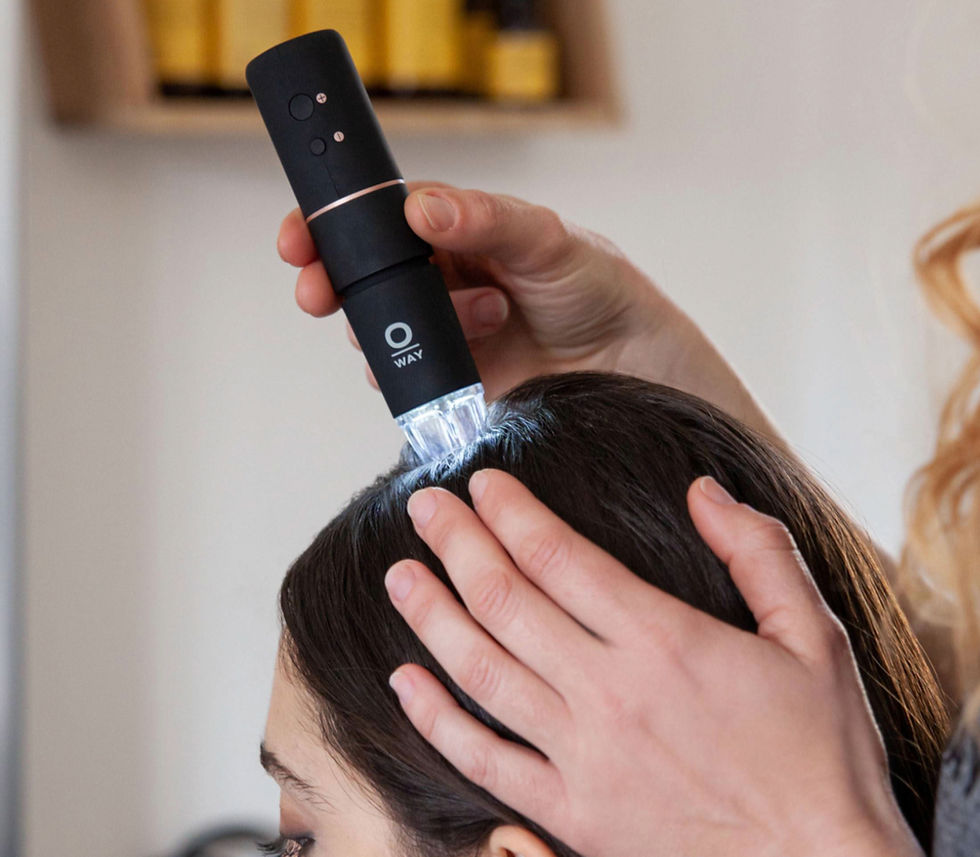
A dedicated head spa session addresses this at the source. The scalp analysis at the start of every LUSTRE session identifies what is driving the imbalance — buildup, overproduction, damage, or a combination. The professional cleanse removes what at-home washing cannot reach. The OWay treatment applied during the session works with the scalp's own systems rather than fighting against them.
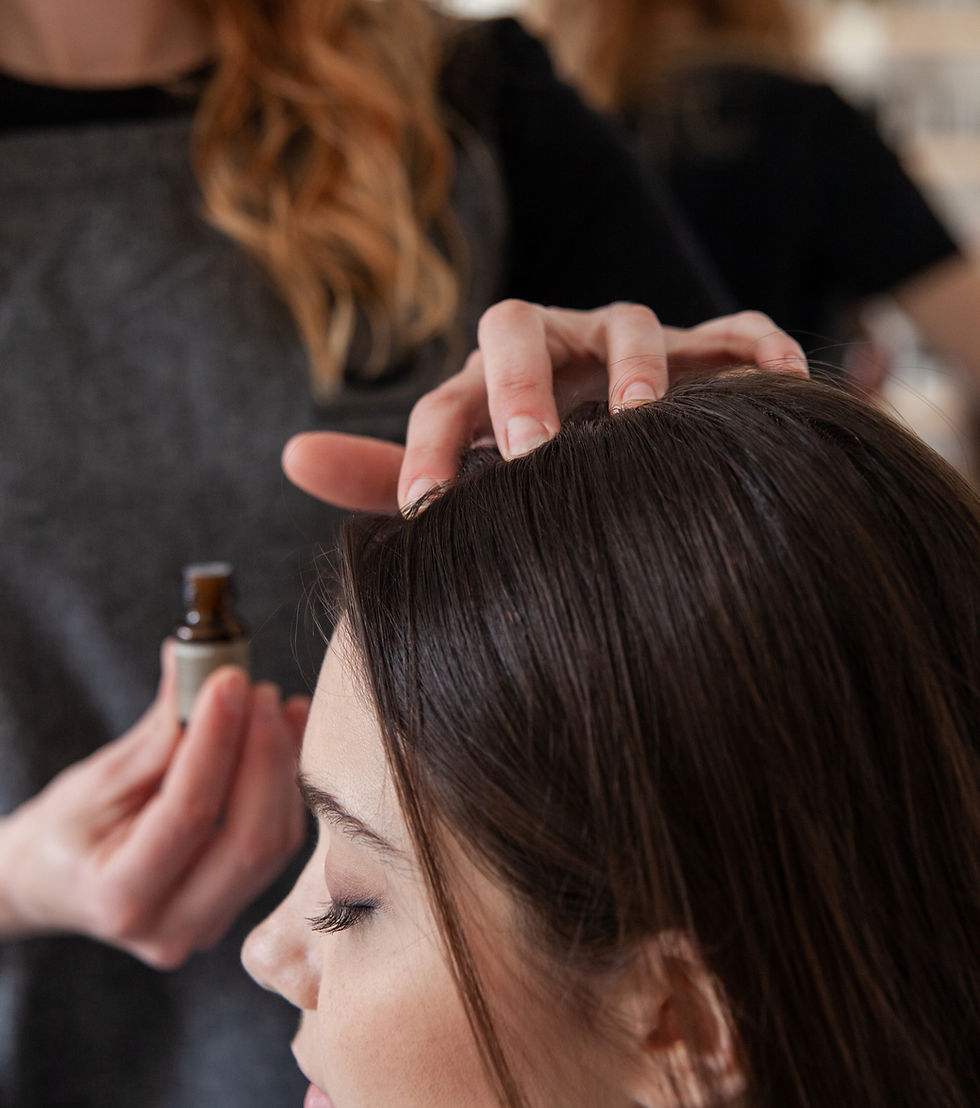
The session closes with OWay's Flowerfall — a botanical essence of steam-distilled hydrolats of biodynamic lavender, rosemary, and rose, applied in a continuous pour by our licensed specialists. It restores scalp pH and seals the hair cuticle after treatment. Most clients leave a session noticing their scalp feels balanced in a way it has not in months.
COMMON QUESTIONS
Can I fix an oily scalp at home?
Partially. Adjusting washing frequency and switching to sulfate-free products will reduce the severity of the cycle. But if buildup is a significant contributor — and it usually is — a professional scalp cleanse is the fastest reset. Buildup accumulates below the level that shampoo reaches, and it requires manual exfoliation and the right products to clear.
Will a head spa make my hair oilier?
No. A properly performed head spa session resets the scalp environment rather than adding oil. Most clients notice their scalp stays balanced for longer after a session, which means less urgency to wash, less product use, and over time, reduced oil production overall.
How often should someone with an oily scalp visit a head spa?
Monthly is the standard cadence for clients managing oily scalp conditions. The first few sessions produce the most noticeable reset. Subsequent sessions maintain the balance. Our LUSTRE Membership ($99/month) is designed for exactly this — one Signature Headspa Ritual each month, timed to keep the scalp regulated between visits.
If your scalp has been sending mixed signals and you are ready for a real reset, we are ready to help.
1835 E Edgewood Drive, Lakeland, FL 33803 | (863) 370-7139 | By appointment only

Comments