.png)
Scalp Oiling Is Trending Again. Here's What It Actually Does For Your Hair.

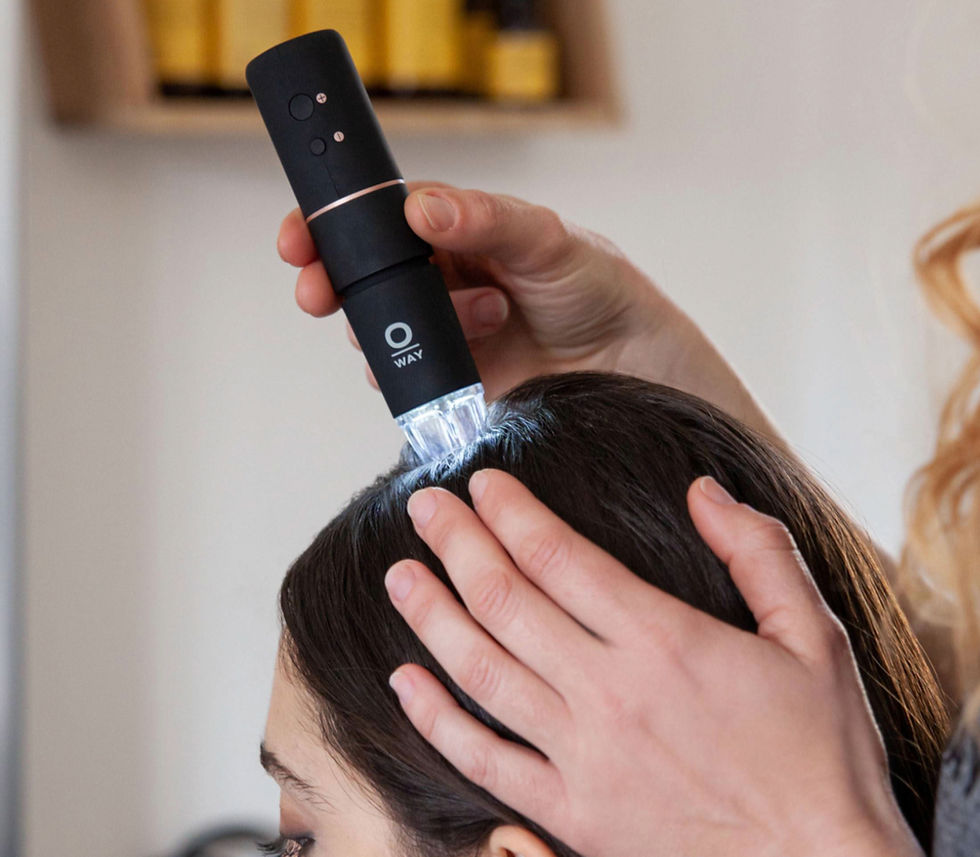
Scroll through fall hair-trend roundups this year and you will run into the same image over and over: hair oil worked in close to the scalp, combed straight back for a glossy, almost wet-look finish. Scalp oiling is having a real moment for Fall 2026, and unlike a lot of trends that show up and vanish by January, this one has a genuine technique underneath the aesthetic. Here is what scalp oiling actually does, what it cannot realistically do, and how a professional application differs from doing it yourself in the bathroom mirror.
WHAT "SCALP OILING" ACTUALLY MEANS
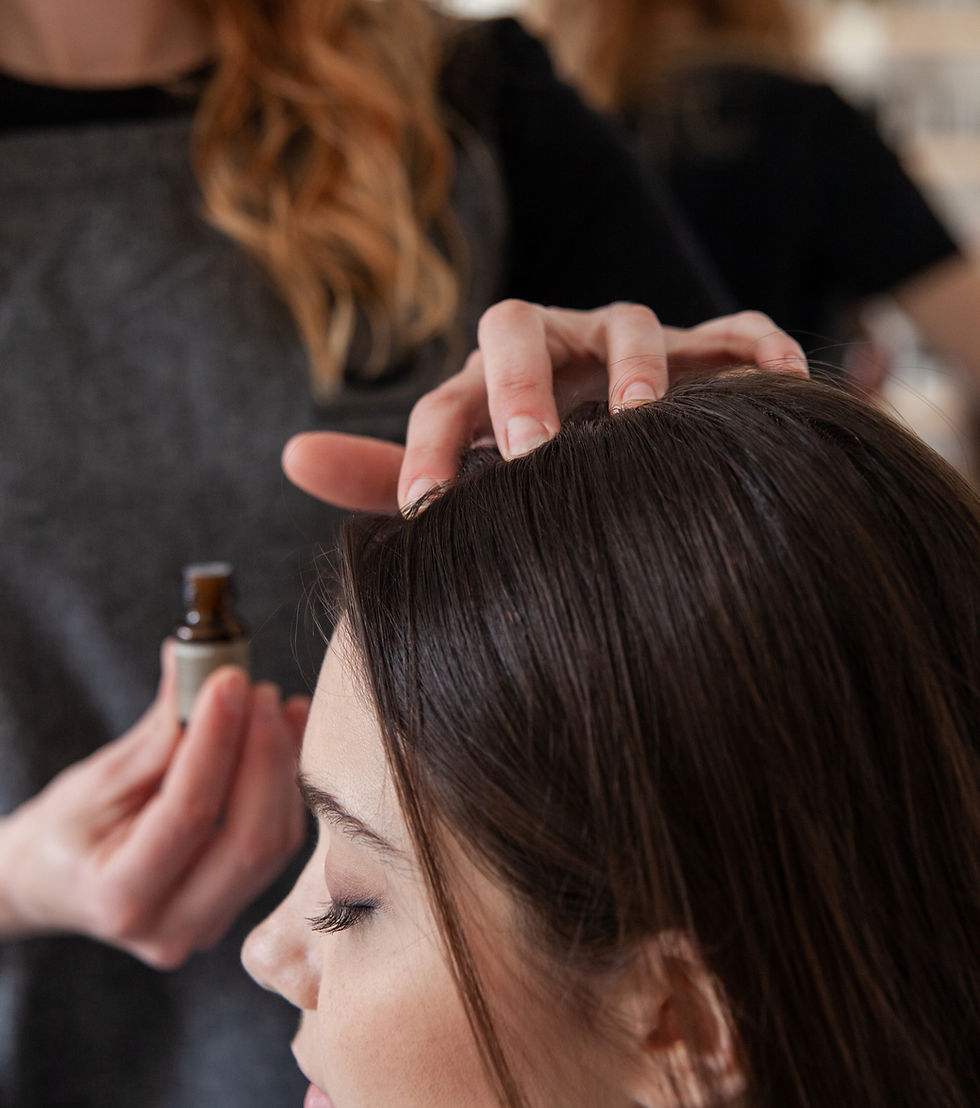
Scalp oiling is not the same thing as putting oil on your hair. Applying oil to the ends of your hair is a styling and moisture step. Scalp oiling means working oil into the skin at the roots and massaging it in, the same way you would work a facial oil into the skin on your face rather than just letting it sit on top. The massage matters as much as the oil itself, gentle, sustained pressure across the scalp is what actually brings circulation to the area. Oil without massage is a product sitting on skin. Oil with real massage is closer to what the trend is describing, even when the video only shows the finished, glossy result.
THIS IS NOT A NEW IDEA WITH NEW ATTENTION ON IT
Working oil into the scalp by hand is an Ayurvedic technique that has been documented for centuries, not something a trend cycle invented this year. It is one of the reasons LUSTRE builds Ayurvedic method into its rituals alongside Japanese head spa technique, oil-based scalp massage was never a gap that needed a viral moment to fill it. What changed is the audience, not the practice.
WHAT OILING CAN ACTUALLY DO
Done well, scalp oiling can genuinely help with a few specific things. It can ease visible dryness and flaking that comes from a scalp lacking moisture, which is a different cause than dandruff. It can add shine and manageability to the hair itself. And the massage component supports relaxation and circulation the way any real scalp massage does. What it cannot honestly do is regrow hair, reverse hair loss, or treat a medical scalp condition. Any claim promising those results, whether it comes from an influencer or a product label, is overselling what oil on skin is capable of.
THE PART THE TREND VIDEOS SKIP: HOW MUCH, AND WHICH OIL
This is where DIY oiling most often goes wrong. Too much oil, the wrong oil for your scalp type, or oil left in without a real cleanse afterward does not nourish a scalp, it buries it under buildup. That can make an oily scalp worse, and it can trap the same kind of summer residue a Lakeland scalp already deals with from humidity, sunscreen, and product left over from the season. Oily scalps generally need less oil, applied more precisely at the roots. Drier scalps can tolerate more, but "more" still has a ceiling before it starts working against you rather than for you.
HOW A LUSTRE RITUAL HANDLES IT DIFFERENTLY
A LUSTRE ritual does not skip the step most DIY oiling misses. Every ritual starts with a scalp analysis from our licensed specialists, so the oil, the amount, and the massage technique are matched to what your scalp is actually doing that day, not poured on the same way for everyone. From there it is certified organic OWay oil worked in with real, sustained pressure, followed by a full cleanse that lifts the oil back out along with whatever it picked up, rather than leaving a scalp coated the way an unrinsed DIY application can. The result is the benefit of the technique without the residue that makes the trend backfire when it is done alone at home.
COMMON QUESTIONS ABOUT SCALP OILING
Is scalp oiling actually good for your hair?
For a scalp that is dry or a bit dull-looking, yes, in a limited and honest sense: it can ease dryness-driven flaking and add shine and manageability. It is not a treatment for hair loss, dandruff, or any medical scalp condition, and claims that it is should be treated skeptically.
Can you oil your scalp too much?
Yes. Too much oil, or oil left in without a proper cleanse, sits on the scalp as buildup rather than nourishing it, which can worsen oiliness and trap other residue underneath it. Less, applied precisely and followed by a real cleanse, works better than more.
What is the difference between oiling at home and a professional scalp treatment?
A DIY application usually skips the diagnostic step, applying the same oil in the same amount regardless of scalp type, and often skips a thorough rinse afterward. A professional treatment starts with an actual scalp analysis, matches the oil and technique to what is found, and finishes with a real cleanse so nothing is left sitting on the scalp.
Does oiling help with dandruff or dryness?
It can help with simple dryness-related flaking. Dandruff has a different underlying cause and is not reliably solved by oil alone. If flaking persists, or comes with itching or redness, that is worth a dermatologist's look rather than more oil.
Scalp oiling is trending for a reason, not because it is new, but because the technique underneath it has always worked when it is done with the right amount, the right oil, and a real cleanse afterward. That is the version LUSTRE has been doing all along.
Book your ritual at lustreheadspa.com. Appointment-only. 1835 E Edgewood Drive, Lakeland, FL 33803.


Comments